For any pilot, the final approach is one of the most critical phases of flight. Achieving a safe, stable, and precise touchdown requires a combination of skill, instrumentation, and clear visual guidance. Among the most crucial visual aids on any modern runway or helipad are the PAPI and APAPI systems. These unassuming lights on the side of the runway provide immediate, unambiguous information, helping pilots maintain the perfect glide path, day or night.

In this article, we’ll explore what PAPI and APAPI lights are, how they work, their critical role in aviation safety, and how Signalight’s solutions are setting the standard for reliability and precision in airport lighting.
What are PAPI and APAPI systems?
A PAPI, or Precision Approach Path Indicator, is a visual aid and guidance system that provides pilots with information about their aircraft’s position relative to the correct vertical approach path. A standard PAPI system consists of a row of four light units placed perpendicular to the runway edge.
An APAPI, or Abbreviated Precision Approach Path Indicator, functions on the same principle but uses only two light units. APAPI systems are typically used where a standard four-unit system is not feasible, such as at heliports or airports with limited space.
Signalight manufactures both ICAO and FAA-compliant systems, ensuring maximum safety and durability:
 PAPI – Precision Approach Path Indicator
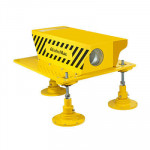 APAPI – Abbreviated Precision Approach Path Indicator
How to interpret PAPI light signals: a pilot’s view
The genius of the PAPI system lies in its simplicity. By observing the combination of red and white lights, a pilot can instantly determine their position on the glide path and make necessary corrections.
Here’s how to interpret the signals and what actions to take:
| Visual Signal |
Interpretation |
Recommended Pilot Action |
| ⚪⚪⚪⚪ |
Too High |
Increase descent rate by gently reducing power. |
| ⚪⚪⚪🔴 |
Slightly High |
Make a minor correction to descend onto the path. |
| ⚪⚪🔴🔴 |
Correct Glide Path |
Maintain a stabilized approach. |
| ⚪🔴🔴🔴 |
Slightly Low |
Make a minor correction to ascend onto the path. |
| 🔴🔴🔴🔴 |
Too Low (Danger) |
Immediately increase power to arrest the descent. |
An APAPI aviation system works similarly, with One White/One Red indicating the correct glide path, as shown in the simulation below:
What to do if you’re too high or too low?
- If you are too high (excess white lights): you need to increase your descent rate to intercept the correct glide path. This is typically done by gently reducing engine power and/or lowering the aircraft’s nose. Avoid aggressive maneuvers.
- If you are too low (excess red lights): you must immediately arrest the descent and climb back to the glide path. This is a critical safety action, achieved by increasing engine power. Once the correct path is re-established, you can adjust power for a stabilized approach.
The technology behind precision and safety
Each PAPI unit projects a beam of light that is precisely split, with a white upper segment and a red lower segment. The sharp transition between colors is what allows the system to provide such accurate guidance.
The standard glide path angle is 3 degrees. However, this can be customized for specific airfields to ensure safe clearance over obstacles on the approach path. The visibility of these lights is exceptional, typically effective from a distance of up to 5 miles (8 km) during the day and up to 20 miles (32 km) at night, although adverse weather like fog or heavy rain can reduce this range.
The benefits of using PAPI lights are immense:
- Vastly improved safety: PAPI systems are proven to significantly reduce the risk of undershoot or overshoot accidents by providing a consistent and stable approach reference.
- Increased efficiency: stabilized approaches lead to more predictable landings, reduced pilot workload, and potential fuel savings.
- Operational versatility: they provide indispensable guidance at airports that lack expensive radio-navigation aids (like ILS) and serve as a crucial visual backup at those that do.
From VASI to PAPI: a brief evolution
Before PAPI became the global standard, many airfields used the Visual Approach Slope Indicator (VASI). While functional, VASI systems used two separate bars of lights, providing less precise guidance than the modern PAPI’s single, crisp horizontal line of lights. The adoption of PAPI by the International Civil Aviation Organization (ICAO) as the standard has led to a more harmonized and safer global aviation environment.
Regulations and maintenance: ensuring reliability
The reliability of a PAPI system is non-negotiable. Installation, placement (typically on the left side of the runway), and maintenance are governed by strict ICAO and national aviation authority regulations.
Key maintenance requirements include:
- Regular cleaning: lenses must be kept free of dirt, dust, and snow.
- Precise alignment & calibration: the angle of each light unit must be periodically verified with specialized equipment to ensure the glide path indication is accurate.
- Lamp/LED replacement: timely replacement of light sources to maintain consistent brightness and color.
- Structural integrity: ensuring the frangible couplings are functional, allowing the unit to break away safely if struck by an aircraft.
This rigorous upkeep is why choosing high-quality, durable equipment is essential for airport operators. Signalight’s proven track record, visible in our many completed lighting projects, demonstrates a commitment to building robust and reliable systems. Take a look below at various examples of PAPI and APAPI systems installed on runways and heliports by our team:
At Signalight, we understand that safety in the sky begins with reliability on the ground. From PAPI systems and heliport lighting to advanced obstruction lights and versatile portable lighting solutions, our mission is to provide aviation professionals with the tools they need to operate safely and efficiently.
Frequently Asked Questions (FAQ)
Q: How do PAPI lights work compared to VASI lights?
A: PAPI uses a single row of 2 or 4 adjacent light units, offering a single, more precise glide path. VASI typically used two parallel light bars, a ‘near’ bar and a ‘far’ bar, making it slightly less precise. PAPI has now largely replaced VASI as the ICAO standard.
Q: Are there exceptions to the standard 3-degree glide path?
A: Yes. While 3 degrees is the most common, the angle can be set higher (e.g., 3.5 or 4 degrees) at locations with significant obstacles on the approach path, such as mountains or tall buildings.
Q: What are some common mistakes pilots make when using PAPI lights?
A: Common errors include “chasing” the indications with aggressive control inputs instead of making smooth corrections, or relying solely on the PAPI without cross-referencing their flight instruments, especially in challenging weather.
Q: How are pilots trained to use PAPI lights?
A: Pilots learn to interpret PAPI signals during their initial flight training. Modern flight simulators are an invaluable tool, as they can accurately replicate PAPI visuals in a variety of airports and weather conditions, allowing for extensive practice.
Q: What happens if a PAPI light malfunctions?
A: A common malfunction is a burnt-out lamp or LED. If one of the four lights is out, the system can still be used, but pilots must be more cautious. Any malfunction requires immediate reporting and maintenance action to ensure the system’s integrity.
Q: How many PAPI lights are there in the US National Airspace System?
A: PAPI systems are a global standard, with thousands installed in major aviation networks like the US National Airspace System and across EASA member states. This widespread adoption underscores their critical role in modern aviation safety and makes the manufacturing of reliable, compliant systems, such as those produced by Signalight, essential for the vast infrastructure of global airports.
Explore our full range of Signalight lighting solutions or contact our team to discuss your specific airfield requirements.