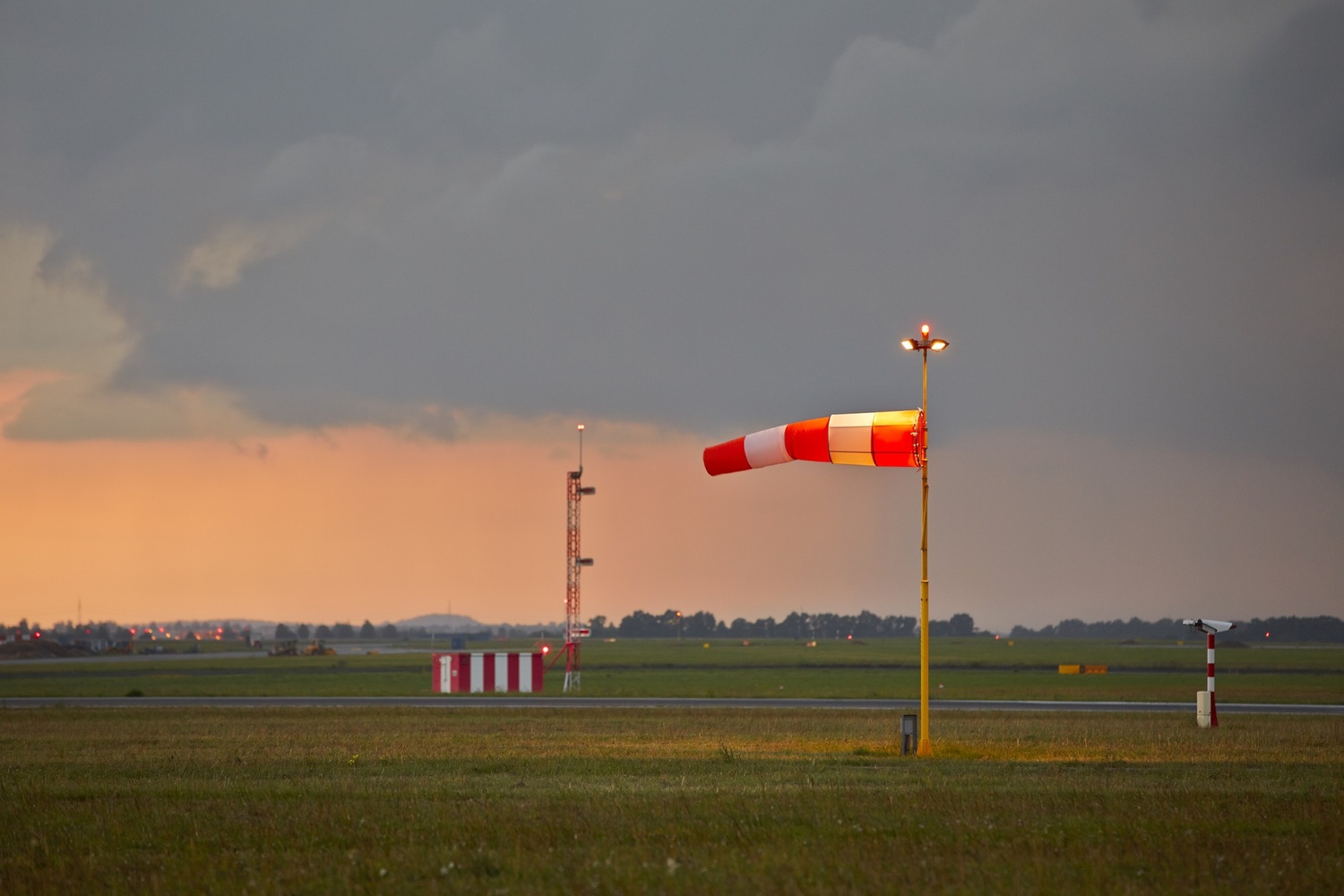
Wind direction and speed are fundamental variables for any pilot during the critical phases of takeoff and landing. While modern aircraft cockpits are equipped with highly advanced digital meteorological data, a direct, visual confirmation of ground-level wind conditions remains an absolute necessity.
For 24/7 operations, relying on natural light is not an option. An illuminated aviation windsock guarantees that this visual reference is highly visible during night flights, fog, or adverse weather conditions, ensuring uninterrupted safety for both commercial hubs and specialized medical helipads.
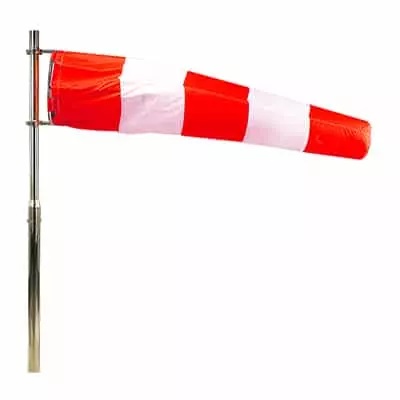 Wind direction indicator
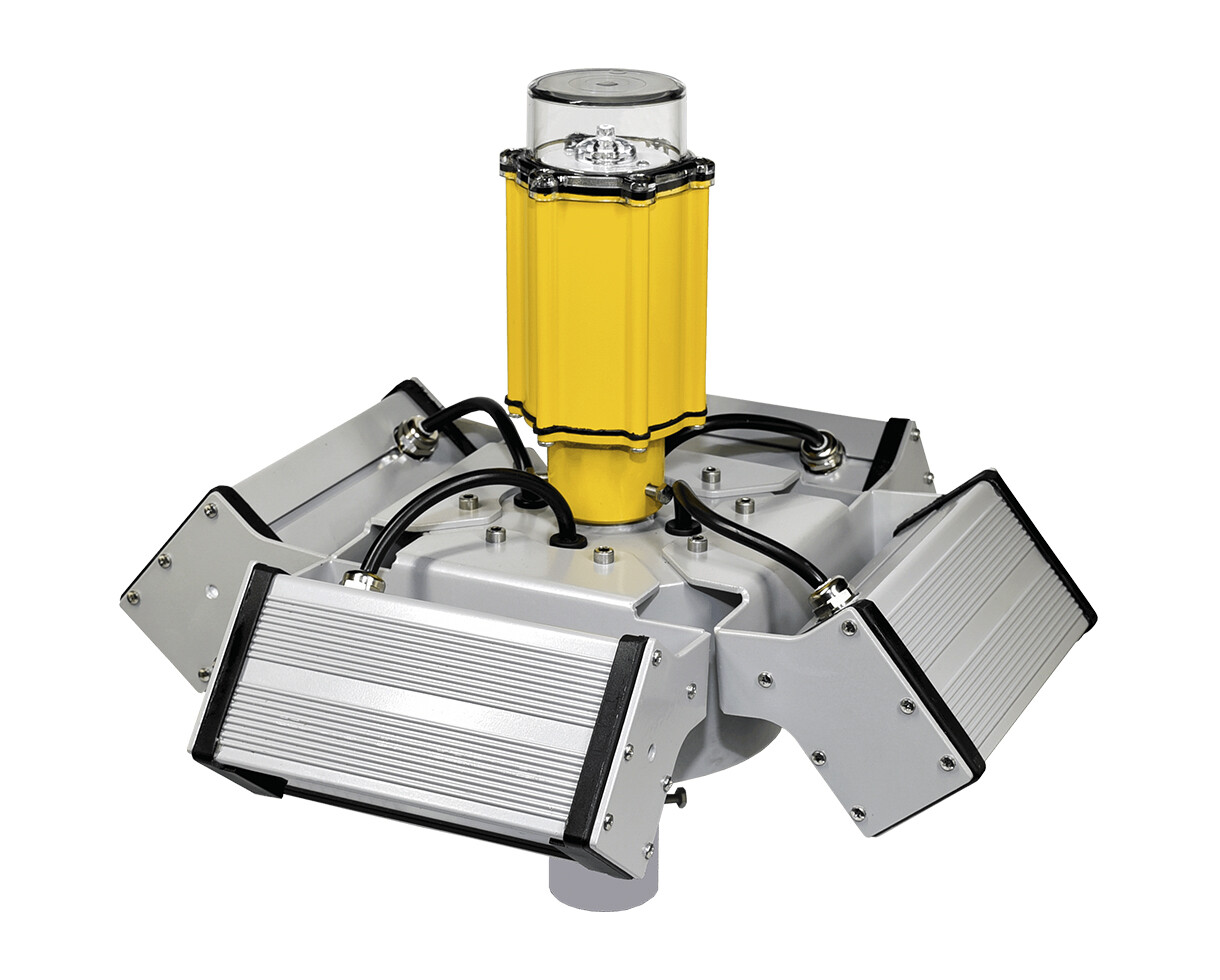 Lights of externally illuminated windsock
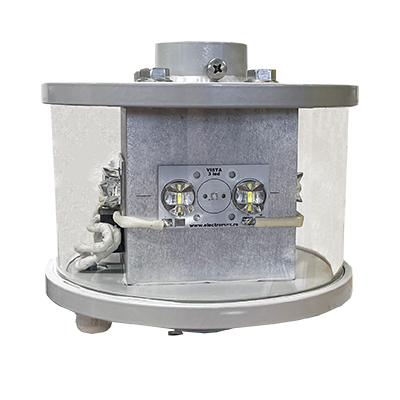 Lights of internally illuminated windsock
Understanding the role of the aviation windsock
An aviation windsock provides an instant, unambiguous visual cue. It requires no radio transmission or digital interpretation – it simply shows the pilot exactly what the wind is doing at the landing site at that exact moment.
Whether managing a major international tarmac or a smaller regional facility, installing an accurate airfield windsock ensures pilots can make immediate decisions regarding approach angles, potential crosswinds, and safe touchdown parameters. A well-placed airport windsock acts as the primary, fail-safe indicator for final approach adjustments.
The role of the wind cone in rotorcraft operations
Unlike fixed-wing aircraft that primarily need to know wind direction for runway alignment, helicopters are highly sensitive to wind velocity and direction during the hover and transition phases. An illuminated windsock (or wind cone) is a primary flight tool that provides real-time, analog data to the pilot without requiring them to look down at cockpit instruments.
Compliance with international standards
Aviation infrastructure must adhere strictly to global and national safety regulations. When selecting a wind indicator, decision-makers must evaluate the exact ICAO windsock specifications or the relevant FAA windsock regulations, depending on their geographic region.
An approved ICAO windsock must meet strict criteria regarding its dimensions, taper, color (typically aviation orange or red and white striped), and the performance of its lighting systems. Ensuring that your runway windsock complies with these standards protects both the operational integrity of the facility and its legal liability.
To maintain operational status, especially for night-time or HEMS (Helicopter Emergency Medical Services) operations, illuminated windsocks must meet specific international criteria:
- ICAO Annex 14 requirements: Every heliport must be equipped with at least one wind cone. If the TLOF is intended for night use, the wind cone must be illuminated. Read more about the Lighting Solutions for Medical Heliports (HEMS) in our previous article.
- FAA AC 150/5345-27 requirements: Specifies the “L-806” (low mass) or “L-807” (rigid) styles for wind cones, ensuring they are frangible and properly lit.
Technical components of an illuminated windsock
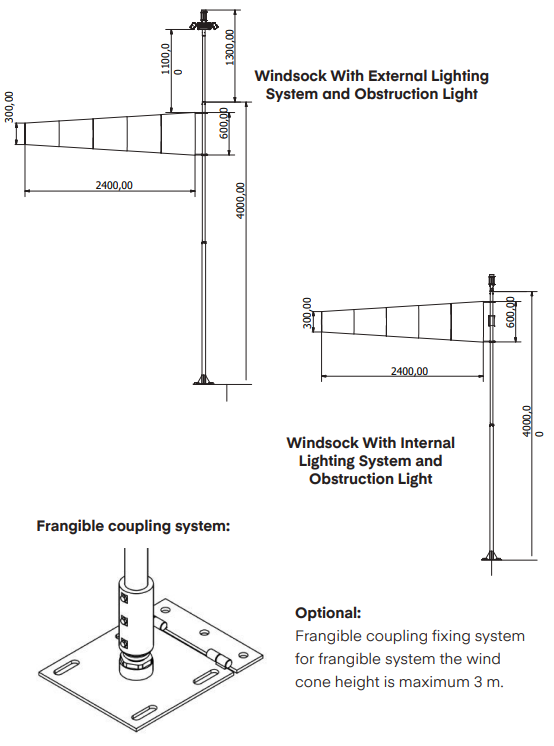
The fabric cone is only one component of the entire assembly. A durable, highly engineered airport windsock frame is necessary to withstand extreme weather conditions, preventing the fabric from tangling and ensuring it rotates freely with the slightest change in wind direction. Also, a safety-grade windsock system is an engineered lighting assembly:
- Internal vs. external lighting: Internal lighting (LED lamps inside the basket) provides a “glow” that highlights the entire shape of the sock. External lighting (top-mounted spotlights) ensures the color and displacement are visible from a distance.
- Obstruction lighting: A steady-burning red LED light is typically mounted on top of the mast to prevent the windsock assembly itself from becoming a strike hazard.
- Swivel mechanism: High-quality bearings ensure the sock reacts to even low-velocity winds (under 3 knots), providing accurate data for precision hovering.
At Signalight, we design complete, integrated systems. Our windsocks for airports are engineered with robust, non-corrosive materials and high-efficiency LED lighting technologies. This approach significantly reduces maintenance costs and energy consumption while delivering exceptional longevity and reliability in harsh environments.
Why “illuminated” is non-negotiable for night safety
Visual cues are significantly reduced during night approaches. An illuminated windsock provides:
- Velocity estimation: The angle of the windsock (the “extension”) tells the pilot the wind speed at a glance.
- Turbulence identification: A flickering or rapidly shifting windsock warns of mechanical turbulence caused by nearby buildings or obstacles.
- Final approach stabilization: Pilots use the windward side of the heliport to maintain stability; without illumination, a pilot might inadvertently land with a tailwind, risking a Loss of Tail Rotor Effectiveness (LTE).
Solutions for every facility
The logistical requirements for a high-traffic international hub naturally differ from those of a regional airstrip or a hospital rooftop. However, the requirement for absolute safety is universal.
Whether your project requires a massive, externally lit assembly for a main commercial runway or a small airport windsock for an isolated landing zone, the quality of the visual aid must be uncompromising. Having a dependable windsock at airport locations, strategically distributed along long runways and specific touchdown zones, guarantees that pilots have continuous, accurate wind data throughout their entire maneuver.
Signalight expertise and proven projects
We specialize in translating complex technical regulations into tangible, durable, and easily maintainable solutions for the aviation industry. You can explore the full technical specifications of our wind direction indicators and other visual aids on the Airport Guidance Systems and Heliport Guidance Systems pages.
Our commitment to high engineering standards and long-term partnerships is reflected in our global portfolio. From temporary deployments to permanent infrastructure upgrades for international airports and HEMS bases, our systems are trusted worldwide. To see how we have successfully implemented these safety systems in the field, we invite you to review the Signalight projects page and the ones below: