Explore our full range of lighting solutions, or contact our team to talk about your specific airfield requirements.
The final moments of a flight, the approach and landing, are arguably the most critical. Pilots rely on a sophisticated array of instruments and visual cues to navigate safely onto the runway, especially when faced with challenging conditions like night, fog, or heavy rain. Among the most vital visual aids are Approach Lighting Systems (ALS). These intricate networks of lights play a paramount role in guiding aircraft, ensuring pilots can confidently transition from instrument-based flight to visual contact with the runway environment.

The “Why”: purpose and critical role of ALS
An Approach Lighting System (ALS) is a series of high-intensity lights installed along the approach path to a runway. Their primary purpose is to provide unambiguous visual guidance to pilots, helping them align the aircraft with the runway centerline and maintain the correct descent path, particularly in conditions of reduced visibility. In essence, ALS is a critical airport infrastructure component that bridges the gap when pilots transition from relying solely on cockpit instruments to visually identifying the runway environment and making those final, precise adjustments for a safe touchdown. These lights are fundamental for visually confirming the aircraft’s position and trajectory relative to the runway.
Global harmony: the ICAO Standard for Approach Lights
To ensure worldwide consistency and the highest levels of safety in aviation, the International Civil Aviation Organization (ICAO) has established a standardized system for approach lights. This ICAO system dictates specific patterns and intensities for these lights, which extend from the runway threshold out into the approach area. This standardization means pilots will encounter familiar and reliable visual cues at airports across the globe, a crucial factor in mitigating risks during the critical landing phase. Signalight is committed to upholding these rigorous ICAO standards in all its aviation lighting solutions, ensuring that our products contribute to a globally harmonized and safe aviation environment.
A spectrum of solutions: types of Approach Lighting Systems
Not all runways or airports have the same operational requirements, so Approach Lighting Systems come in various configurations to meet diverse needs.
Standard Systems for Precision
- CAT I ALS: this is a basic system designed for precision approaches. It typically features white lights extending 420 meters (1,380 feet) from the runway threshold.
- CAT II and CAT III ALS: these are more advanced and extensive systems engineered for low visibility operations. They feature additional lights, extending up to 900 meters (3,000 feet), and often incorporate sequenced flashing lights to provide robust guidance when visibility is significantly impaired.
Simplified and Specialized Systems
- Simplified Approach Lighting Systems (SALS): as the name suggests, SALS are shorter and less complex configurations, often used at airports with lower traffic volumes or less complex operational requirements. They provide essential visual cues with a more streamlined setup.
- Simplified Short Approach Lighting System (SSALS/SSALR): this type, such as the SSALR (Simplified Short Approach Lighting System with Runway Alignment Indicator Lights), is specifically designed for smaller airports or runways where space constraints are a factor. It offers crucial visual guidance in a more compact form.
Generally, a “simple approach lighting system” will have fewer lights and shorter extension distances than more advanced systems.
Intensity-Based Systems
- Medium Intensity Approach Lighting Systems (MALS): these systems, like the MALSR (Medium Intensity Approach Lighting System with Runway Alignment Indicator Lights), strike a balance between simplicity and effectiveness, often combining medium-intensity steady-burning lights with sequenced flashing lights.
- High Intensity Approach Lighting Systems (HIALS): HIALS are deployed at high-traffic airports or those frequently experiencing poor visibility. They feature very bright, high-intensity lights visible from a considerable distance, providing clear and unambiguous guidance for precision approaches in adverse weather.
Signalight offers a range of ALS components and systems, including those suitable for various categories and complexities, ensuring that airports of all sizes can achieve compliant and effective approach guidance.
Deconstructing the glow: key components of an ALS
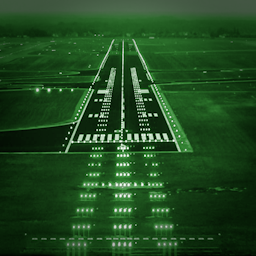
Approach Lighting Systems are more than just a random collection of lights; they are precisely engineered patterns of different light types, each serving a specific purpose.
- High-Intensity Lights: these form the backbone of the system, arranged in precise patterns.
- Steady-Burning Lights: these provide continuous illumination, helping pilots establish and maintain alignment and perceive the ground plane.
- Sequenced Flashing Lights (SFL): often referred to as “rabbit lights,” these lights flash in a rapid sequence (typically twice per second) towards the runway threshold. They create a clear, animated path that actively draws the pilot’s eye, significantly enhancing runway identification and tracking in low visibility.
- Crossbar Lights: these are short bars of lights arranged perpendicularly to the main ALS centerline at specific intervals. They provide crucial lateral guidance and help pilots assess their roll attitude relative to the horizon.
- Centerline Lights: these lights define the extended runway centerline within the ALS pattern.
- Runway Alignment Indicator Lights (RAIL): these are flashing lights that extend the centerline of the approach lights, providing further guidance.
- Threshold Lights: positioned at the beginning of the runway, these lights clearly mark the start of the usable landing surface and are typically green.
The blueprint: ALS configuration and placement
The effectiveness of an ALS hinges on its precise configuration and placement.
- Length of the System: the overall length of an ALS varies significantly depending on its type and the operational category of the runway. As mentioned, CAT I systems typically extend 420 meters, while CAT II/III systems can reach up to 900 meters. Simplified systems like SSALS will naturally have shorter lengths.
- Spacing of Lights: within the system, individual lights are typically spaced between 30 to 60 meters (100 to 200 feet) apart along the approach path, though this can vary based on the specific system design and airport configuration.
- Location: the ALS is always located along the approach path to a runway, extending outwards from the runway threshold directly into the area from which aircraft will make their final approach. The exact layout is meticulously planned to provide optimal visual guidance.
- Color Coding: approach lights are predominantly white. However, some systems incorporate red lights in the section closest to the runway – typically the last 300 meters (1,000 feet) – to warn pilots of their imminent proximity to the runway threshold. Signalight’s Vista Approach line and our solar-powered approach components include options for these critical elements, ensuring pilots receive all necessary visual cues for a safe approach.
Below you can watch a short presentation video showcasing the landing of an aircraft guided by our Vista Approach lighting system, installed in Lac La Biche Airport from Alberta, Canada. To explore more of our work, visit the Signalight Projects page.
The power behind the light: technology in ALS
Modern Approach Lighting Systems, like most airfield lighting, predominantly utilize LED (Light Emitting Diode) technology. This shift to LEDs is driven by their numerous advantages:
- High efficiency: LEDs consume significantly less energy compared to older technologies.
- Long lifespan: they have a much longer operational life, reducing maintenance frequency and costs.
- Consistent brightness: LEDs provide stable and consistent light output throughout their lifespan.
- Durability: they are more resistant to vibration and environmental factors.
While some older systems might still use halogen or incandescent bulbs, these are progressively being phased out and replaced by superior LED solutions due to their enhanced performance and energy efficiency. Signalight is at the forefront of this transition, specializing in LED-based aviation lighting that offers reliability, longevity, and operational cost savings to airports and heliports. Our solar-powered ALS components further enhance these benefits by providing sustainable and easily deployable options.
Signalight’s commitment to illuminating safe approaches
At Signalight, we understand that reliable and compliant Approach Lighting Systems are non-negotiable for aviation safety. We are dedicated to providing airports and heliports with state-of-the-art lighting solutions that meet and exceed ICAO and other relevant international standards.
Our offerings in the realm of approach lighting include:
- The “Vista Approach” Line: a comprehensive range of elevated lights designed for various ALS configurations, ensuring robust and clear guidance.
- Solar-Powered ALS Components: we provide innovative solar solutions, including Approach Center Lights and Crossbars, perfect for airfields seeking sustainable, off-grid, or rapidly deployable options without compromising on performance (e.g., our solar APP lights offer 6,100 cd).
- Precision Approach Path Indicators (PAPI/APAPI): essential for glide slope guidance, our PAPI systems integrate seamlessly to provide pilots with a complete visual approach solution. You can learn more on this topic in our blog article: PAPI and APAPI Systems: ensuring safe approaches day and night.
- Runway Threshold Identification Lights (RTILs): enhancing threshold conspicuity, our RTILs contribute to the overall safety of the approach and landing maneuver.
- Portable Lights Systems: are a critical solution for various scenarios, such as providing temporary guidance during runway maintenance, establishing emergency landing strips for disaster relief, or equipping remote airfields that lack permanent infrastructure. The Signalight Polaris System is an advanced, robust solution that effectively meets these operational demands, offering a complete kit of autonomous, battery-powered lights (with solar charging options) that can be controlled wirelessly via radio and tracked via GPS.

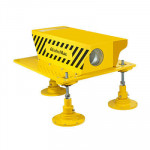
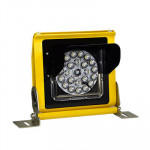
All Signalight products are engineered with a focus on durability, energy efficiency (primarily using LED technology), and ease of maintenance, providing our clients with long-term value and operational peace of mind. We work closely with airport designers, constructors, and operators to ensure that the chosen ALS solutions are perfectly tailored to their specific needs and environmental conditions.
Conclusion
Approach Lighting Systems are unsung heroes of aviation safety. These meticulously designed configurations of lights provide the critical visual link between the instrument-guided phase of flight and the final visual confirmation of the runway, especially when pilots need it most. From the comprehensive CAT III systems at major international hubs to the simplified solutions at regional aerodromes, ALS plays an indispensable role in guiding countless aircraft to safe touchdowns every day.
Share this article