Safe and efficient ground movement is a cornerstone of airport operations. While takeoffs and landings often capture the imagination, the intricate network of taxiways – the “road system” of an airfield – is where the critical process of navigating aircraft between runways, aprons, and terminals takes place. This complex ballet of machinery relies on a standardized system of lighting and signage to ensure pilots can move safely and confidently, especially at night or during low-visibility conditions.
Understanding this system is crucial for airport operators, contractors, and pilots alike. It’s a language of light and color designed for clarity, precision, and, above all, safety, helping to prevent runway incursions and collisions with other aircraft or ground obstacles.

The core components of Taxiway Guidance
Standardized by international bodies like the ICAO and FAA, the taxiway guidance system is designed to be universally understood. It primarily consists of two elements working in tandem:
- Specialized lights that define paths and edges
- Guidance signs that provide locational and directional information
Together, they form a comprehensive navigational aid that minimizes risk and ensures a smooth operational flow.
What color are Taxiway Lights?
Color is the most fundamental element in airfield lighting. While blue and green are the most common, red and yellow play critical safety roles.
Taxiway Edge Lights: the blue perimeter
The most common question asked is, what color are taxiway edge lights? The answer is always blue. These steady, omnidirectional blue lights are used to outline the edges of taxiways, defining the safe operational perimeter for aircraft and helping pilots distinguish the taxiway from surrounding non-pavement areas.
Depending on the airfield’s specific requirements and environmental conditions, these lights come in various forms. For instance, elevated taxiway lights are mounted on short posts to ensure they are clearly visible above snow or vegetation. In regions with harsh weather, durability is paramount, which is why robust solutions like the VISTA taxiway lights are engineered from top-quality materials to withstand extreme temperatures and conditions.
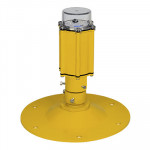 Elevated heliport taxi light
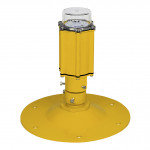 Runway taxi elevated light
Also, to prevent creating an obstacle on the pavement, some lights are designed to be flush with the surface. Modern inset taxiway lights are built for seamless integration and long-term durability, while specialized flat taxiway lights must adhere to stringent international electrical and design standards to guarantee performance and safety.
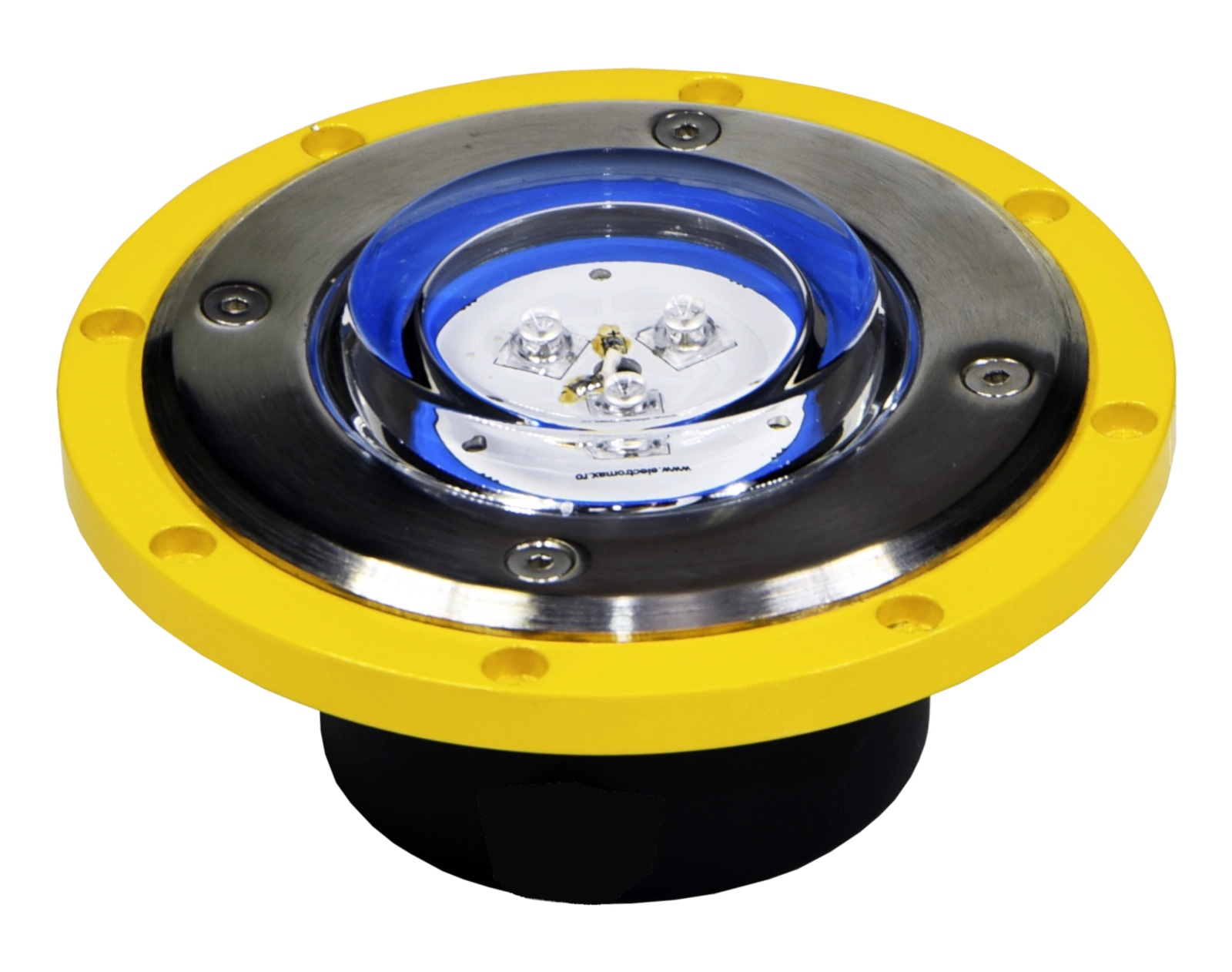 Heliport inset taxi light
 Flat taxi heliport light
Curious how these lights look in real settings? Take a look at a few of our Signalight projects where we’ve used them:
Taxiway Centerline Lights: the green path
While blue lights mark the edges, green lights are used to illuminate the taxiway centerline. These are typically installed on major taxiways at larger airports, especially along complex or long routes. As a pilot follows the continuous line of steady green lights, they are assured they are on the correct and safest path.
Critical Safety Lights: red and yellow
To provide a complete overview, it’s essential to understand two other critical colors:
- Red Lights: these are used for ‘stop bars’ and are installed across a taxiway at the holding point before a runway. When illuminated, these steady red lights signify a mandatory stop; pilots may not cross until the lights are turned off and they receive clearance from air traffic control.
- Yellow Lights: these are often used as runway guard lights. A pair of flashing yellow lights on either side of the taxiway warns pilots that they are about to intersect with a runway, prompting heightened situational awareness.
Comparing Elevated and Inset Lights
Taxiway lights come in two primary physical forms, each suited for different applications.
| Light Type |
Installation |
Primary Use Case |
Key Advantage |
| Elevated Lights |
Mounted on short posts beside the taxiway. |
Taxiway edge marking (blue lights). |
Clearly visible, especially in areas with snow or vegetation. Robust models like the VISTA taxiway light are built to withstand harsh weather. |
| Inset Lights |
Installed flush with the pavement surface. |
Taxiway centerline (green), stop bars (red). |
Creates no obstruction for aircraft, essential for surfaces that are driven over. Modern inset and flat taxiway lights ensure seamless integration and durability. |
Understanding Taxiway Guidance Signs: your airfield roadmap
While lights define the path, signs provide the critical information needed to navigate it. The primary function of a taxiway sign is to give pilots clear, unambiguous information about their location and direction.
Learning how to read taxiway signs is essential for any pilot:
- Location Signs (black with yellow lettering): these tell you which taxiway you are currently on. They feature a single yellow letter (e.g. ‘B’ for Taxiway Bravo) on a black background.
- Directional Signs (yellow with black lettering): these signs point the way to other taxiways. They feature black letters on a yellow background, with arrows indicating the direction of the turn required to enter that taxiway.
- Mandatory Instruction Signs (red with white lettering): these are the most critical signs. They indicate an entrance to a runway or another critical area and signify that a pilot must stop and await clearance from air traffic control before proceeding.
For these signs to be effective, they must be clear, legible, and reliably illuminated. High-quality Guidance Signs for both taxiways and runways are therefore indispensable components of airfield safety infrastructure.
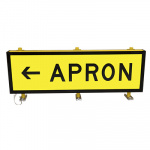 Guidance sign
Ensuring operational continuity: emergency lighting solutions
In a 24/7 operational environment, system reliability is non-negotiable. When a standard taxiway light fails or an area becomes temporarily unserviceable, airports need rapid and effective solutions to maintain safety standards. The aviation industry relies on several types of emergency lighting, including portable battery-powered units and versatile multi-color LED fixtures that can be deployed quickly. These systems ensure that guidance is maintained without disrupting traffic flow.
A prime example of a modern, advanced solution is the POLARIS Emergency RGBW Light. This type of omnidirectional LED fixture is designed for rapid deployment and maximum flexibility. Its RGBW (Red, Green, Blue, White) capability allows a single unit to function as a temporary replacement for a taxiway edge light (blue), an unserviceability marker (red), or even threshold/runway lights, ensuring that safety and compliance are maintained in any critical situation.
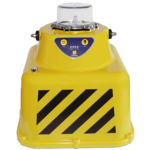 POLARIS Emergency RGBW Light
A system built on precision and safety
The taxiway guidance system is a testament to the aviation industry’s commitment to safety. Through a simple yet effective language of color and symbols – blue for edges, green for centerlines, and clear signage for direction – pilots can navigate even the most complex airfields. The integrity of this system depends entirely on the quality, durability, and compliance of the lighting components used, forming a network of precision that guides every aircraft safely to its destination.
Discover our complete range of Signalight lighting solutions, or get in touch with our team to discuss your specific airfield needs.